

Can Nasal Polyps Cause Postnasal Drip Without an Obvious Runny Nose?
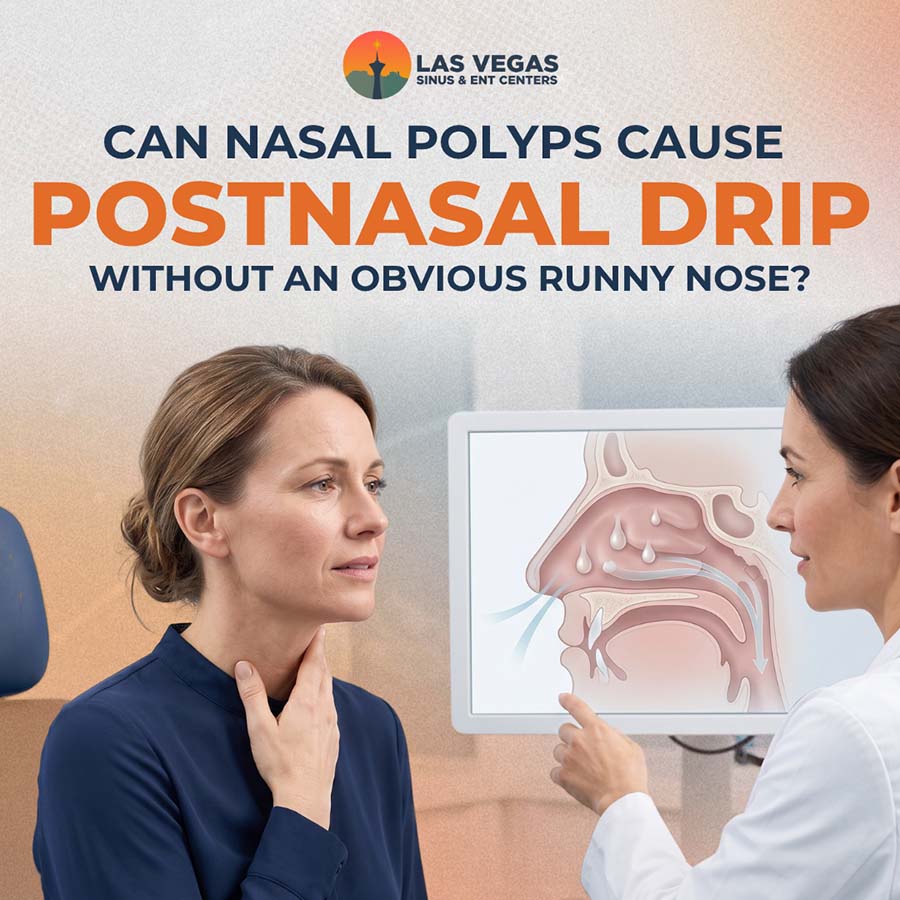
Mucus draining down the back of the throat can cause frequent throat clearing, hoarseness, an irritated throat, or a lingering cough. Yet some people experience these symptoms without noticing mucus coming from the front of the nose.
Nasal polyps are one possible contributing factor. Polyps and the inflammation associated with them can interfere with normal nasal and sinus drainage, allowing mucus to move toward the throat instead of out through the nostrils.
At Las Vegas Sinus & ENT Center, we help patients in Henderson, Las Vegas, and nearby Nevada communities identify possible causes of postnasal drip and determine whether nasal polyps or another condition may be involved.
Can Nasal Polyps Cause Postnasal Drip Without a Runny Nose?
Yes. Nasal polyps may contribute to postnasal drip even when there is no obvious runny nose.
Polyps and surrounding inflammation can obstruct normal airflow and drainage inside the nose and sinuses. Mucus may then collect or travel down the back of the throat rather than draining from the front of the nose.
However, postnasal drip does not confirm that nasal polyps are present. Allergies, infections, nonallergic rhinitis, acid reflux, medications, and several other conditions can produce a similar sensation.
What Are Nasal Polyps?
Nasal polyps are soft, painless, noncancerous growths that form in the tissue lining the nose and sinuses. They are associated with chronic inflammation and usually develop on both sides of the nasal cavity.
Small polyps may cause no noticeable symptoms. Larger polyps or groups of polyps can obstruct the nasal passages and interfere with airflow or sinus drainage.
Possible symptoms include:
- Persistent nasal congestion
- Difficulty breathing through the nose
- A runny nose
- Postnasal drip
- Reduced sense of smell
- Reduced perception of flavor
- Snoring or mouth breathing
- Facial pressure or headaches associated with underlying sinus inflammation
- Recurrent or persistent sinus symptoms
Nasal polyps may occur alongside chronic rhinosinusitis, asthma, allergies, or aspirin-exacerbated respiratory disease. They may also return after treatment, which means some patients require continued medical management.
What Causes Nasal Polyps?
Nasal polyps are associated with ongoing inflammation in the lining of the nose and sinuses. It is not completely understood why some people with nasal inflammation develop polyps while others do not.
Conditions associated with an increased likelihood of nasal polyps include:
- Chronic rhinosinusitis
- Asthma
- Allergic rhinitis
- Aspirin-exacerbated respiratory disease
- Cystic fibrosis
- Certain immune or inflammatory conditions
Allergies may contribute to inflammation in some patients, but allergies are not responsible for every case of nasal polyps.
What Is Postnasal Drip?
Postnasal drip describes the noticeable sensation of mucus collecting in or draining down the back of the throat.
The glands in the nose and throat constantly produce mucus. Most of the time, this mucus mixes with saliva and is swallowed without being noticed. When mucus production increases, becomes thicker, or drainage changes, the sensation can become much more obvious.
Symptoms associated with postnasal drip may include:
- A feeling of mucus draining into the throat
- Frequent throat clearing
- Frequent swallowing
- Coughing, particularly when lying down
- An irritated or sore throat
- Hoarseness or changes in the voice
- A sensation of a lump in the throat
- Bad breath or an unpleasant taste
- Nausea in some cases
These symptoms can overlap with reflux, asthma, throat irritation, and other conditions. A chronic cough or persistent throat symptoms should not automatically be attributed to postnasal drip.
Why Might There Be No Obvious Runny Nose?
Mucus can travel in more than one direction. When it moves forward, it appears as a runny nose. When it moves backward toward the throat, it may produce postnasal symptoms without visible nasal drainage.
Several factors may contribute:
- Swelling or polyps obstructing the front of the nasal passage
- Mucus collecting behind an area of obstruction
- Thickened secretions moving slowly toward the throat
- Gravity making drainage more noticeable while lying down
- Inflammation increasing mucus production
- Reflux or throat irritation creating a sensation similar to mucus drainage
Because the sensation can have several causes, an examination may be necessary when symptoms persist.
What Else Can Cause Postnasal Drip?
Nasal polyps are only one possible explanation. Other causes or contributing factors include:
- Allergic rhinitis
- Nonallergic rhinitis
- Colds and other viral infections
- Sinusitis
- A deviated septum
- Dry air or changes in temperature
- Smoke, fragrances, and other irritants
- Spicy foods
- Pregnancy and other hormonal changes
- Certain medications
- Gastroesophageal or laryngopharyngeal reflux
- Structural problems affecting nasal drainage
Yellow or green mucus alone does not establish that an infection is bacterial or that antibiotics are needed. A healthcare provider should consider the complete pattern of symptoms and examination findings.
How Are Nasal Polyps and Postnasal Drip Evaluated?
An evaluation may begin with questions about:
- How long the symptoms have been present
- Whether drainage is clear, thick, bloody, or discolored
- Whether symptoms affect one or both sides
- Whether allergies, meals, exercise, or lying down make symptoms worse
- Whether there is facial pressure, reduced smell, cough, or reflux
- Which medications or home treatments have already been tried
The provider may examine the nose and throat and perform nasal endoscopy when appropriate. This uses a thin instrument with a light or camera to look for polyps, inflammation, drainage, or structural problems.
CT imaging, allergy testing, or other testing may be recommended when the history and examination suggest a need for additional information.
How Is Postnasal Drip Treated?
Treatment depends on the underlying cause. There is no single treatment that is appropriate for every case of postnasal drip.
Depending on the diagnosis, a provider may recommend:
- Saline nasal spray or irrigation
- Corticosteroid nasal sprays
- Antihistamines for allergy-related symptoms
- Avoiding identified allergens or irritants
- Adequate hydration
- Treatment for an underlying infection when clinically appropriate
- Evaluation and treatment of reflux
- Treatment of a structural obstruction
- Medical or surgical treatment for nasal polyps
Antibiotics are appropriate only for certain bacterial infections and do not treat allergies, viral infections, reflux, or nasal polyps.
Decongestants are not appropriate for everyone. Topical decongestant sprays can cause rebound congestion when used longer than directed, and oral decongestants may be unsuitable for people with certain heart, blood-pressure, prostate, thyroid, or eye conditions. Ask a healthcare professional before using them if you have underlying medical conditions or take other medications.
If you perform nasal irrigation, use distilled, sterile, or previously boiled and cooled water. Follow the device instructions and clean the irrigation equipment after use.
How Are Nasal Polyps Treated?
Treatment typically focuses on reducing inflammation, improving symptoms, and addressing contributing conditions.
Options may include:
- Corticosteroid nasal sprays or rinses
- Short-term oral corticosteroids in selected cases
- Treatment for coexisting allergies
- Biologic medications for certain patients
- Endoscopic sinus surgery when symptoms or obstruction persist despite appropriate medical treatment
Treatment may shrink or remove polyps and improve drainage, but polyps can recur. The appropriate plan depends on symptom severity, examination findings, other medical conditions, and the response to previous treatment.
When Should You Seek Medical Care?
Consider scheduling an evaluation if:
- Postnasal drip persists for more than a few weeks.
- Symptoms do not improve with appropriate home care.
- Throat clearing or coughing interferes with sleep or daily activities.
- You have ongoing nasal congestion or reduced smell.
- You experience recurrent sinus symptoms.
- Symptoms affect only one side of the nose.
- You are uncertain whether allergies, reflux, an infection, or another condition is responsible.
Seek prompt medical attention for:
- Difficulty breathing
- Difficulty swallowing or inability to swallow liquids
- Coughing up blood
- Bloody nasal drainage or recurrent nosebleeds
- Swelling around an eye or changes in vision
- Severe headache, facial swelling, or facial numbness
- Confusion, neck stiffness, or other neurological symptoms
- A persistent foul-smelling discharge, particularly from only one side
- High or persistent fever accompanied by worsening symptoms
Nasal polyps usually occur on both sides of the nose. A single growth or persistent obstruction on only one side should be evaluated because not every nasal mass is a benign polyp.
Frequently Asked Questions
Can nasal polyps cause throat clearing?
They may contribute to drainage that triggers throat clearing. However, allergies, reflux, infections, dryness, and other throat conditions can cause the same symptom.
Can you have postnasal drip without nasal congestion?
Yes. Some people notice throat drainage, coughing, or hoarseness without feeling significantly congested.
Does postnasal drip mean I have a sinus infection?
No. Postnasal drip can result from allergies, viral illnesses, nonallergic rhinitis, reflux, medications, nasal polyps, and other causes.
Will treating nasal polyps stop postnasal drip?
It may help when polyps and related inflammation are important contributors. Improvement is not guaranteed because more than one condition may be causing the symptoms.
Are nasal polyps cancerous?
Typical nasal polyps are benign. However, a one-sided growth, bloody discharge, recurrent nosebleeds, or persistent one-sided blockage should receive medical evaluation.
Understanding Postnasal Drip and Nasal Polyps
Nasal polyps may contribute to postnasal drip without causing an obvious runny nose. Still, the sensation of mucus in the throat has many potential causes, and symptoms alone cannot confirm the presence of polyps.
Las Vegas Sinus & ENT Center provides ear, nose, and throat care for patients in Henderson, Las Vegas, and surrounding Nevada communities.
If persistent postnasal drip, nasal obstruction, or other sinus symptoms are affecting your comfort, schedule an appointment with Las Vegas Sinus & ENT Center to discuss your symptoms and appropriate next steps.