

Top Questions to Ask During Your First ENT Appointment
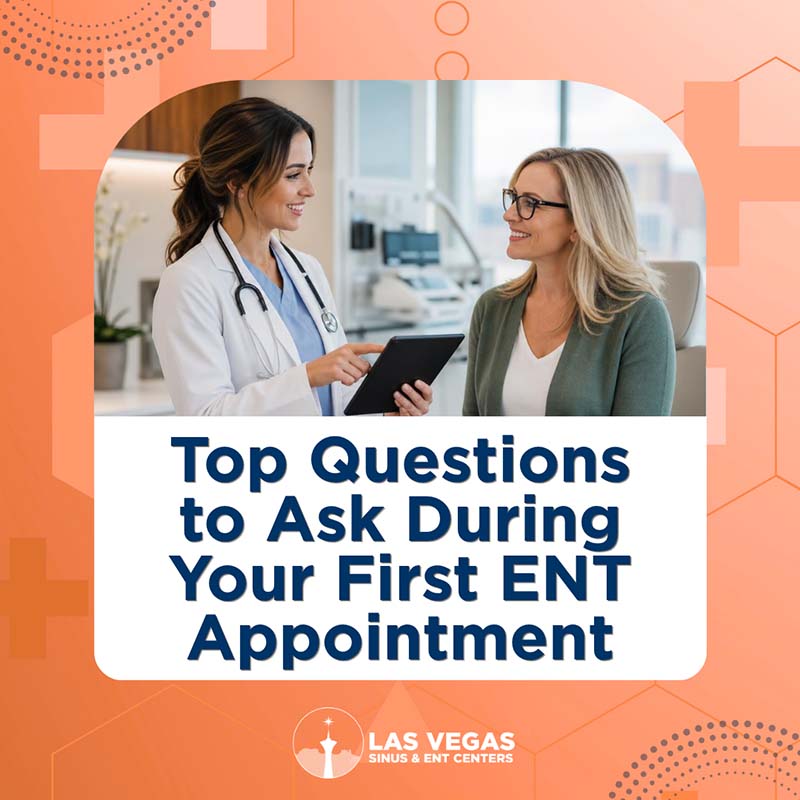
Walking into your first ENT appointment can bring a mix of relief and uncertainty. You finally have time set aside to talk about symptoms that have been bothering you, but you may not know what to expect once you arrive. At Las Vegas Sinus & ENT Centers, one of the most common things patients say is, “I wish I knew what questions to ask beforehand.” Preparing a few thoughtful questions can help you get more from your visit and leave with a clearer understanding of your symptoms and the next steps.
You know you’re dealing with constant congestion, recurring ear pain, or a lingering sore throat, but you’re not sure what’s causing it—or what questions you should ask. The good news is that your first visit isn’t just about getting examined. It’s also your opportunity to better understand your symptoms and what comes next. Asking the right questions can help you leave with more confidence about your care.
What Could Be Causing My Symptoms?
This is often the best place to begin.
Many ear, nose, and throat symptoms overlap. Nasal congestion, facial pressure, headaches, and postnasal drip, for example, can be linked to allergies, chronic sinus inflammation, a structural issue inside the nose, or even multiple conditions at once.
An ENT evaluates the full picture rather than focusing on just one symptom. During your visit, don’t hesitate to ask:
- What do you think is causing my symptoms?
- Could more than one condition be involved?
- Are there environmental factors making things worse?
For people living in Las Vegas and nearby communities, dry desert air, dust, and seasonal pollen can all contribute to ongoing irritation, making it even more important to identify the underlying cause instead of assuming it’s “just allergies.”
Will I Need Any Tests?
Not every patient requires additional testing, but your provider may recommend diagnostic tools based on your symptoms and medical history.
For example, someone with recurring nasal congestion may benefit from a sinus assessment, while persistent allergy symptoms may lead to a discussion about allergy testing. Patients experiencing hearing changes, dizziness, or ear fullness may need a hearing evaluation or another type of examination.
Understanding why a test is recommended can help you feel more comfortable with the process.
Consider asking:
- What information will this test provide?
- Is it necessary based on my symptoms?
- How will the results affect my treatment plan?
Are My Symptoms Related to Something Else?
ENT conditions often affect more than one part of the body.
Recurring sinus inflammation can contribute to poor sleep. Nasal obstruction may leave you breathing through your mouth at night, causing fatigue during the day. Ongoing allergies can affect concentration at work or school, while untreated ear problems may interfere with conversations and social activities.
Asking the right ENT about how your symptoms connect can provide valuable insight into why you’ve been feeling the way you do.
What Can I Do to Help Prevent Future Problems?
Treatment is only one part of managing ENT conditions. Prevention also matters.
Ask your provider whether lifestyle changes or environmental changes may help reduce flare-ups. For patients living in Southern Nevada, simple adjustments during windy days or periods of high pollen can sometimes reduce irritation to the nose and sinuses.
You might ask:
- Are there habits that may be making my symptoms worse?
- What should I watch for between appointments?
- Are my symptoms likely to return?
These conversations help you better understand how to manage your condition over time.
How Do I Know It’s Time to Stop Waiting and Get Checked?
It’s common to hope symptoms will eventually improve on their own. Sometimes they do. But when problems continue, waiting longer may only prolong discomfort. It may be time to schedule an ENT evaluation if:
- Symptoms continue for several weeks without improving.
- You experience repeated sinus infections or ear infections.
- Nasal congestion regularly disrupts your sleep.
- Allergies interfere with work, outdoor activities, or family time.
- Hearing changes, dizziness, or persistent throat discomfort don’t go away.
An evaluation doesn’t automatically mean you’ll need a procedure. In many cases, it helps identify factors that may be contributing to your symptoms so you can make informed decisions about your care.
What Are My Next Steps?
Before leaving your appointment, make sure you understand the plan. You can ask questions similar to the following:
- What happens after today’s visit?
- Should I schedule a follow-up appointment?
- What changes should I expect to monitor?
- When should I contact the office if symptoms change?
Having a clear understanding of the next steps can reduce uncertainty and help you stay involved and proactive in your care.
Preparing for a More Productive Appointment
Your first ENT appointment is more than an examination, it’s an opportunity to understand what’s causing your symptoms and create a plan that makes sense for your daily life. Whether you’re dealing with ongoing sinus pressure, allergy symptoms, hearing concerns, or throat discomfort, asking the right questions can help you make informed decisions about your care.
At Las Vegas Sinus & ENT Centers, patients from Las Vegas, Henderson, and surrounding communities are encouraged to take an active role in their appointments. If you’ve been living with symptoms that aren’t improving or keep coming back, scheduling an evaluation can be the first step toward getting answers and understanding your options.